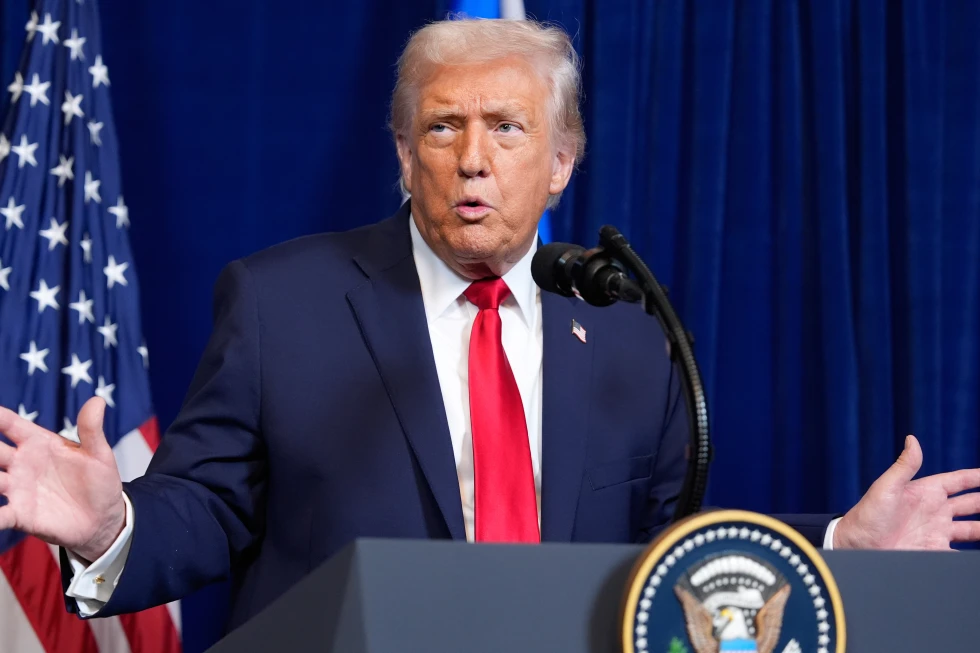

Former President Donald Trump has once again ignited a political firestorm, this time by calling for the arrest of former President Barack Obama over what he describes as a 2016 “coup.” The explosive accusation has reverberated across media platforms, drawing strong reactions from allies and critics alike and reopening long-standing political wounds that have shaped American discourse for nearly a decade.
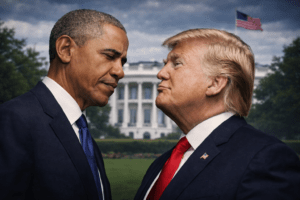
At the heart of Trump’s claim is his enduring belief that elements within the Obama administration sought to undermine his 2016 presidential campaign — and later his presidency — through improper or politically motivated actions. Trump has repeatedly argued that investigations launched during the final months of Obama’s tenure were not merely routine national security matters, but deliberate attempts to damage his candidacy and delegitimize his election victory.
Central to the controversy is the FBI’s investigation into Russian interference in the 2016 U.S. presidential election. That probe examined whether Russian actors sought to influence the outcome of the election and whether any individuals associated with Trump’s campaign had inappropriate contacts with foreign officials. Trump has long maintained that the investigation was rooted in bias and fueled by officials loyal to the previous administration. He contends that surveillance activities targeting members of his campaign were unjustified and politically motivated.
In describing these events, Trump often uses the phrase “deep state,” suggesting that entrenched bureaucratic forces worked behind the scenes to sabotage him. According to this narrative, Obama-era officials used intelligence agencies and federal institutions as tools to weaken a political opponent. Trump’s recent demand for Obama’s arrest elevates that argument to a dramatic new level, portraying the situation not as a partisan dispute, but as an alleged attempt to overturn the will of voters.
The accusation has immediately sparked widespread controversy. Supporters of Trump argue that past investigations into his campaign deserve renewed scrutiny and claim that unanswered questions remain about how intelligence agencies handled surveillance requests and internal communications. They view Trump’s statements as part of a broader effort to hold powerful figures accountable.
Critics, however, strongly reject the allegations. Legal experts note that multiple investigations, including a special counsel probe, examined Russian interference and found evidence of foreign efforts to influence the election, though they did not establish a criminal conspiracy between the Trump campaign and Russia. Many scholars and former officials argue that there is no verified evidence showing that Barack Obama personally orchestrated an illegal operation against Trump.
Democratic leaders have described Trump’s call for Obama’s arrest as politically charged and unsupported by factual findings. They contend that such rhetoric risks undermining public trust in democratic institutions by framing routine oversight and intelligence procedures as criminal conspiracies. Some analysts also suggest that revisiting these claims may serve as a strategic move in the current political climate, energizing supporters and shifting attention toward long-standing grievances.
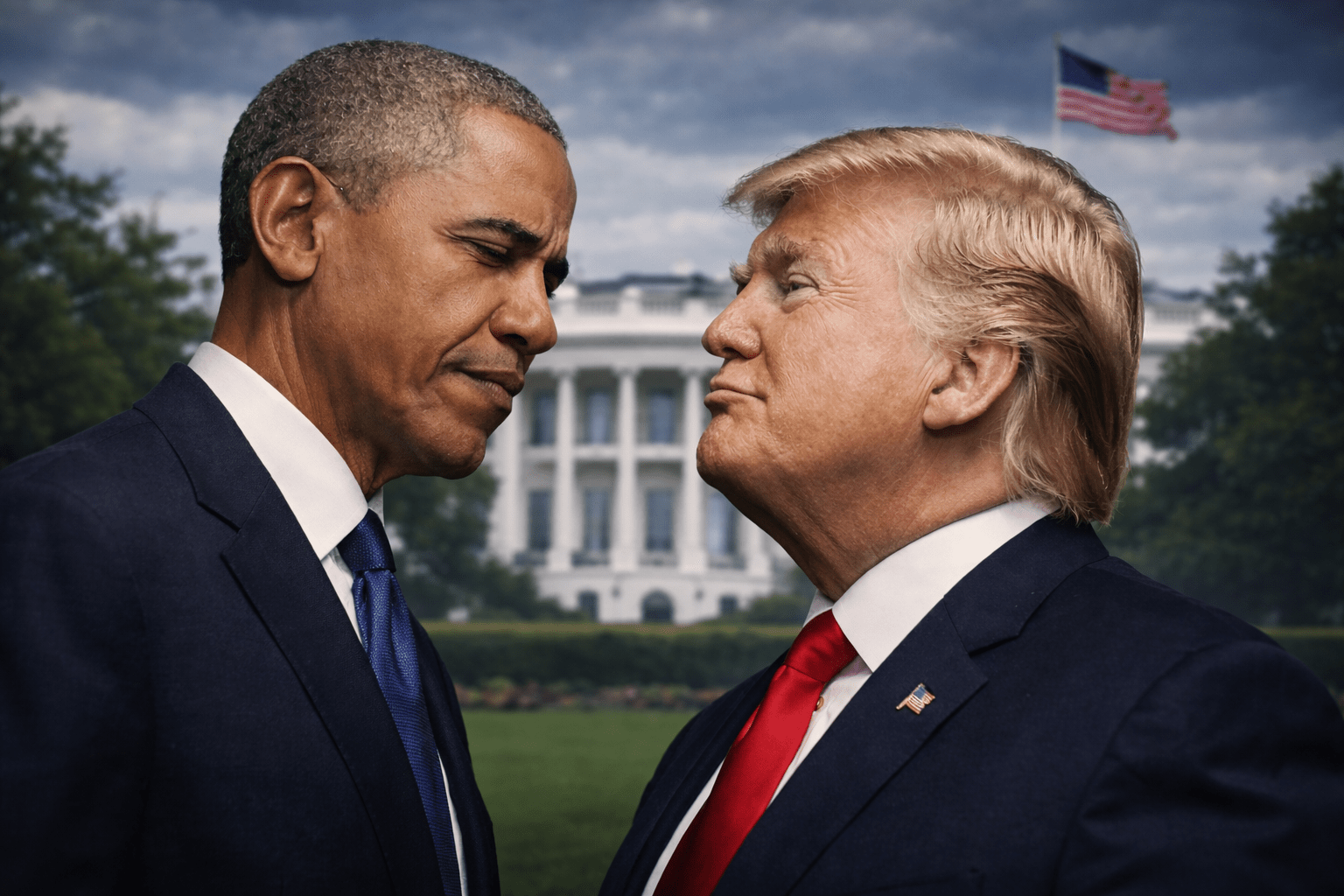
The tension between Trump and Obama is not new. Since Trump entered national politics, their rivalry has symbolized broader ideological divides within the United States. Trump frequently criticized Obama’s policies during his campaign, and their policy visions — on healthcare, immigration, climate change, and foreign relations — often stood in stark contrast. Over time, their differences evolved into a deeply personal and symbolic feud, reflecting the polarization of the electorate itself.
This latest development intensifies that divide. By framing his allegation as a matter of criminal accountability rather than political disagreement, Trump has escalated the rhetoric to a level that few former presidents have directed toward one another in modern American history. The unprecedented nature of a former president publicly calling for the arrest of another has drawn attention not only domestically but internationally.
Political analysts point out that such statements can have far-reaching consequences. Accusations involving former presidents and federal investigations touch on fundamental questions about the rule of law, the separation of powers, and the integrity of democratic processes. They also underscore how deeply contested the narrative of the 2016 election remains years later.
Meanwhile, legal experts emphasize that criminal charges require substantial evidence and prosecutorial action, not political declarations. Without concrete proof of wrongdoing, they argue, such claims remain allegations rather than legal conclusions. Several former officials have reiterated that investigations conducted during and after 2016 were subject to oversight by courts and inspectors general.
The broader public reaction has been predictably divided. Supporters of Trump see his statement as a continuation of his long-standing effort to challenge what he views as unfair treatment. Opponents view it as another example of rhetoric that heightens political tension and distracts from present-day governance issues. Social media platforms and news outlets have amplified both sides, fueling a renewed debate over events that shaped one of the most contentious elections in American history.
What is clear is that the clash between Trump and Obama has become emblematic of a larger cultural and political struggle. It represents differing interpretations of recent history, contrasting visions for the country’s future, and sharply polarized perceptions of federal institutions. Each new exchange or accusation tends to reinforce those divisions rather than resolve them.
As the conversation continues, the implications extend beyond two political figures. The debate raises enduring questions about accountability, evidence, and the boundaries of political speech. It also reflects how narratives surrounding 2016 remain powerful and emotionally charged within the American electorate.
Whether Trump’s demand leads to any formal legal action appears uncertain. What is certain, however, is that the statement has once again thrust the 2016 election and its aftermath into the spotlight. In doing so, it has reminded Americans that the political rivalries born during that era continue to shape national dialogue today.
In a landscape already defined by intense partisanship, this latest chapter adds further complexity. The dispute is not simply about past events — it is about how those events are remembered, interpreted, and leveraged in the present. And as long as those interpretations remain sharply divided, the debate surrounding Trump, Obama, and the legacy of 2016 is unlikely to fade anytime soon.