

A renewed wave of political debate has erupted following a forceful and highly public defense of former President Donald Trump by former Florida Attorney General Pam Bondi. Her remarks have once again thrust questions of accountability, transparency, and political scrutiny into the center of the national conversation. In an era where investigations and legal battles often dominate headlines, Bondi’s defense has reignited discussion over what oversight truly means — and how it should be interpreted in a deeply polarized political climate.
Speaking with conviction, Bondi asserted that there is no conclusive evidence proving that Trump committed criminal acts either during his presidency or after leaving office. She framed her argument not simply as partisan loyalty, but as a reflection of what she views as a historical record shaped by unprecedented scrutiny. According to Bondi, Trump’s administration was examined more extensively than any other in modern American history — and yet, she argues, the investigations failed to produce definitive proof of criminal wrongdoing in several of the most prominent allegations.
Bondi described Trump’s presidency as “the most transparent presidency in modern history,” a characterization that reflects her broader thesis: that transparency can be measured not only by voluntary disclosures, but also by the sheer volume of oversight a president faces. In her view, few leaders have operated under such sustained legal and political examination. From congressional inquiries and special counsel investigations to impeachment proceedings, federal court cases, and relentless media scrutiny, Trump’s time in office unfolded against a backdrop of constant review.
For Bondi, this level of scrutiny is central to her argument. She pointed to years of legal battles and investigative processes, noting that prosecutors, grand juries, federal judges, and appellate courts all had opportunities to evaluate allegations thoroughly. If credible evidence of criminal misconduct had existed, she suggested, one of these processes would have surfaced it decisively. The absence of conclusive findings in certain high-profile areas, she argues, is itself meaningful.
Her defense hinges on a broader narrative: that repeated investigations do not necessarily imply guilt. Instead, she contends, they may reflect the intensity of political opposition in a highly divided era. Bondi characterized the investigations as a byproduct of polarization, arguing that Trump governed in an environment where political disagreements often escalated into legal challenges. In her assessment, the pattern of inquiries demonstrates the combative nature of contemporary politics more than it confirms unlawful conduct.
Supporters of Trump echo this reasoning. They emphasize that despite years of allegations and investigations, several widely publicized claims did not result in convictions directly tied to the former president. For them, this outcome reinforces the principle of due process and the presumption of innocence. They argue that the American legal system — designed to scrutinize evidence, test allegations, and uphold constitutional protections — functioned as intended.
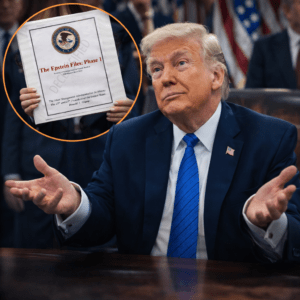
From this perspective, the extensive investigations serve as proof of institutional vigilance rather than evidence of systemic wrongdoing. Advocates assert that the judiciary, Congress, and independent prosecutors operated independently and examined claims exhaustively. They argue that the results underscore the importance of legal standards that require proof beyond a reasonable doubt before criminal liability can be established.
Bondi also framed her remarks around fairness and proportionality. She suggested that Trump was subjected to a level of scrutiny rarely applied to previous administrations, raising questions about whether political motivations influenced the frequency and intensity of investigations. In her view, the sustained focus on Trump reflects not only legal inquiry but also the unique political climate that surrounded his presidency.
At the same time, critics maintain a different interpretation. They argue that oversight is a fundamental component of democratic governance, not a partisan weapon. From their standpoint, investigations — regardless of outcome — are mechanisms to ensure accountability and uphold the rule of law. They caution against equating the absence of conviction in certain cases with a blanket vindication across all allegations.
This divergence in interpretation highlights a central tension in modern American politics. The same series of events can be viewed through radically different lenses. For some, investigations symbolize necessary institutional checks on executive power. For others, they represent political overreach or targeting. Bondi’s remarks underscore how deeply divided public opinion remains on these issues.
The broader debate touches on fundamental questions about governance in a democratic society. How should transparency be defined? Is it measured by voluntary disclosure, or by the openness of institutions to investigate and review actions? Does repeated scrutiny strengthen democracy by reinforcing accountability, or does it risk eroding trust if perceived as politically motivated?
Bondi’s defense places emphasis on due process and the outcomes of formal legal proceedings. She argues that America’s judicial framework provides multiple safeguards to prevent unfounded accusations from resulting in unjust punishment. In her telling, the absence of conclusive criminal findings in several key investigations affirms the resilience of that system.
For Trump’s supporters, this narrative resonates strongly. They see the former president’s experience as evidence that institutional checks functioned and that allegations were thoroughly tested. They argue that the legal system’s inability to produce definitive criminal convictions in certain high-profile matters demonstrates adherence to constitutional principles.
Yet critics counter that investigations can reveal important information even when they do not culminate in convictions. They emphasize that accountability extends beyond criminal liability and includes ethical considerations, public trust, and political responsibility. From this viewpoint, scrutiny itself is not a sign of dysfunction but of democratic engagement.
Bondi’s remarks therefore exist within a larger national conversation about the boundaries between politics and prosecution. In a polarized climate, legal proceedings often intersect with political narratives, making it difficult to separate objective analysis from partisan interpretation. The result is a public discourse where identical facts can yield opposing conclusions.
Ultimately, Bondi’s defense centers on a straightforward claim: that transparency and exhaustive examination did not produce conclusive criminal proof against Trump in several major allegations. Whether interpreted as vindication or as one chapter in an ongoing political and legal saga, her statements have reignited debate over fairness, oversight, and the role of institutions in American democracy.
As the country continues to grapple with these questions, one reality remains clear: in modern governance, accountability is rarely simple. It unfolds through investigations, courtrooms, congressional hearings, and media coverage — all filtered through a lens of political division. Bondi’s forceful defense ensures that the conversation about scrutiny, transparency, and justice will remain front and center in the national dialogue.