
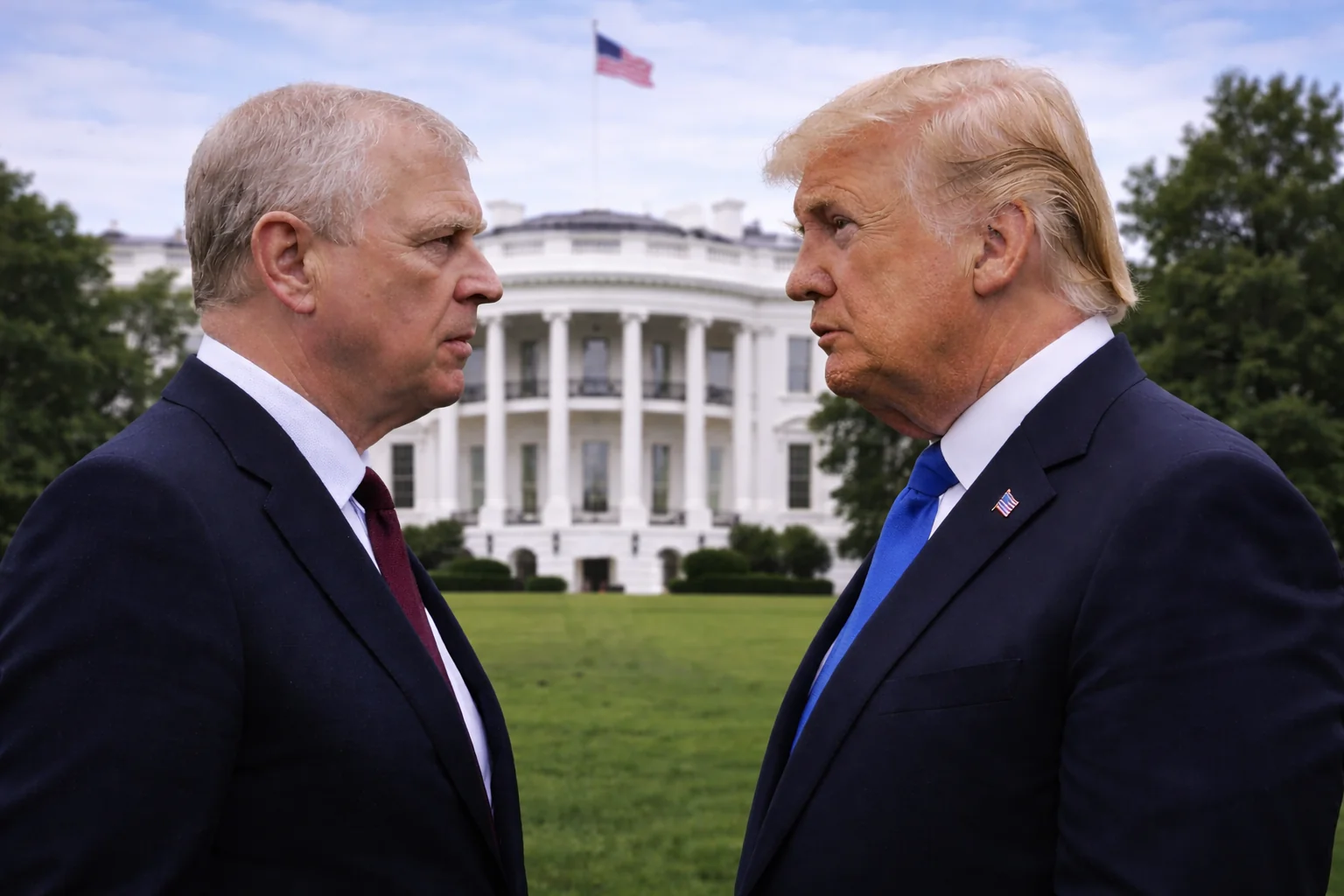
Reports are emerging that Prince Andrew may be preparing to make public all information he allegedly possesses concerning former President Donald Trump and any past connections to Jeffrey Epstein — a development that, if confirmed, could inject new intensity into a story that has already spanned years of scrutiny, controversy, and unanswered questions.
According to individuals said to be familiar with the situation, the Duke of York is considering disclosing details that could shed further light on associations, meetings, and interactions involving Epstein’s social and political circle. While no official statement has yet outlined the scope or timing of such a release, the mere possibility has reignited speculation about what additional documentation, correspondence, or firsthand accounts might reveal.
The Epstein case has long occupied a unique space in public discourse — a convergence of wealth, power, influence, and criminal wrongdoing that touched individuals across political, social, and international spheres. Over the years, fragments of information have surfaced through court documents, investigative journalism, and government filings. Yet many observers argue that significant gaps remain, particularly regarding the full network of relationships that surrounded Epstein.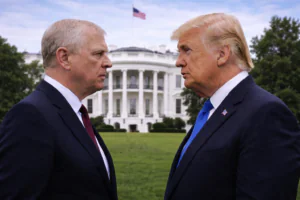
If Prince Andrew were to release substantive material, it could potentially add new dimensions to those ongoing conversations. People close to the matter suggest that the information may provide deeper context about the nature and extent of interactions between high-profile figures and Epstein during the years when he maintained close ties with political leaders, celebrities, financiers, and royalty. Such disclosures, depending on their credibility and detail, could influence how past events are understood and evaluated.
For Donald Trump, whose name has appeared in various public records related to Epstein’s broader social circle, renewed scrutiny could follow. Supporters have consistently argued that prior disclosures have not established wrongdoing on his part, and Trump himself has previously stated that released materials have exonerated him. However, any new documents or firsthand testimony — particularly if they introduce previously unknown facts — would almost certainly prompt further examination by media organizations, lawmakers, and potentially legal authorities.
Legal analysts note that while public revelations do not automatically trigger formal proceedings, credible new information can alter investigative trajectories. Congressional committees, federal prosecutors, or state-level authorities could review such disclosures to determine whether additional inquiries are warranted. In politically sensitive matters, even the perception of new evidence can shift the tone and direction of public debate.
At the same time, observers caution that the impact of any potential release would depend heavily on its substance. Vague claims or previously known details may generate headlines but have limited long-term effect. By contrast, documented communications, detailed timelines, or corroborated accounts could carry far greater weight. The credibility of sources, the authenticity of materials, and the context surrounding the information would all play critical roles in shaping public and institutional responses.
Beyond the legal dimension lies the broader political landscape. The Epstein scandal has repeatedly resurfaced in American political discourse, often serving as a flashpoint for partisan confrontation. Each new disclosure has tended to deepen polarization, with competing narratives forming almost instantly. Supporters and critics alike often interpret developments through preexisting political lenses, reinforcing divisions rather than resolving them.
Should Prince Andrew move forward with a comprehensive public statement or document release, the immediate aftermath would likely involve intense media coverage and rapid reaction from political figures across the spectrum. Lawmakers might call for hearings. Advocacy groups could demand transparency. Legal representatives for those named might issue counterstatements. The story would almost certainly dominate headlines for days or weeks.
There is also the international dimension to consider. Prince Andrew’s own past association with Epstein has been the subject of extensive public controversy in the United Kingdom, leading to significant reputational consequences and legal settlements. Any additional disclosures could ripple beyond American politics, affecting diplomatic relationships, public trust in institutions, and perceptions of accountability on both sides of the Atlantic.
Transparency advocates argue that full disclosure, regardless of political affiliation, is essential to restoring public confidence. They contend that secrecy surrounding powerful figures only fuels suspicion and conspiracy theories. From this perspective, sunlight — even if uncomfortable — is preferable to ambiguity. Critics, however, caution against politicized releases of information that may lack proper legal vetting or context.
In moments like this, the intersection of law, politics, and media becomes particularly complex. Information can be powerful, but interpretation can be equally influential. A single document may be seen by some as damning evidence and by others as inconsequential context. Public opinion, as history has repeatedly shown, often forms quickly and hardens rapidly.
If the anticipated disclosures materialize and prove substantial, they could reshape ongoing narratives about power, influence, and accountability. They might prompt renewed calls for institutional reform, tighter oversight, or deeper investigations into networks of influence that have long operated behind closed doors. Alternatively, if the information ultimately adds little beyond what is already known, the episode may fade into the broader continuum of political controversy.
What remains certain is that the Epstein saga continues to cast a long shadow over global politics. Each potential revelation reopens questions about how individuals in positions of authority navigate relationships, exercise judgment, and respond when those relationships become publicly scrutinized.
As anticipation builds, many are watching closely for clarity. Will the disclosures offer meaningful new insight? Will they withstand legal and factual scrutiny? Or will they intensify political polarization without fundamentally altering established facts?
In an era defined by rapid information cycles and heightened distrust, the stakes are not merely personal or partisan. They touch on larger themes of accountability, transparency, and the public’s right to understand how power is exercised.
Until definitive information is released, much remains speculative. But one thing is clear: if Prince Andrew proceeds with a comprehensive public disclosure regarding Donald Trump and any past associations with Jeffrey Epstein, the consequences — political, legal, and reputational — could be far-reaching. And in a landscape already shaped by division and suspicion, even the possibility of new revelations is enough to command global attention.